






Antalya City Tour
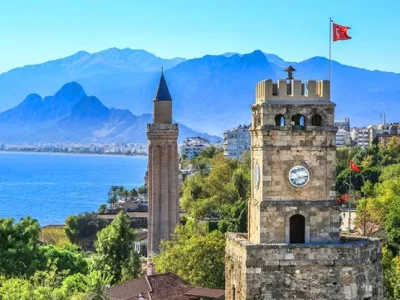
AntalyaIn the Antalya city tour program, you will see the most popular attractions of the charming city of Antalya.


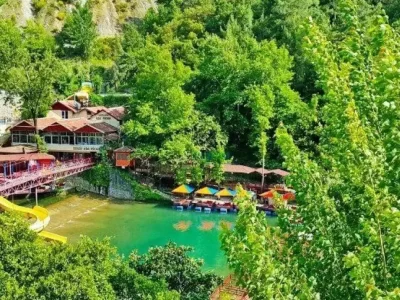


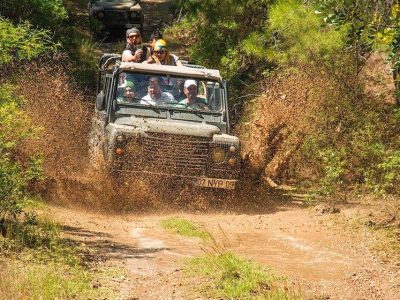


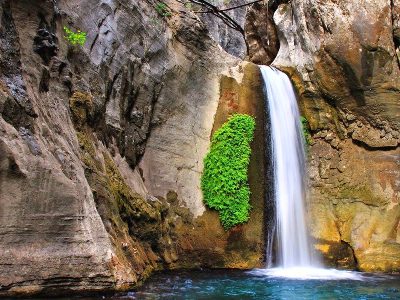

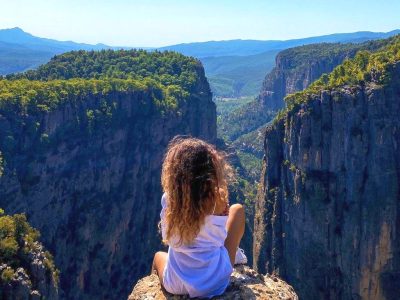
Tazı canyon tour from Alanya is a trip of nature mixed with culture. You will take in the spectacular historical and natural views from the slopes and hills of the Taurus Mountains.

Alanya
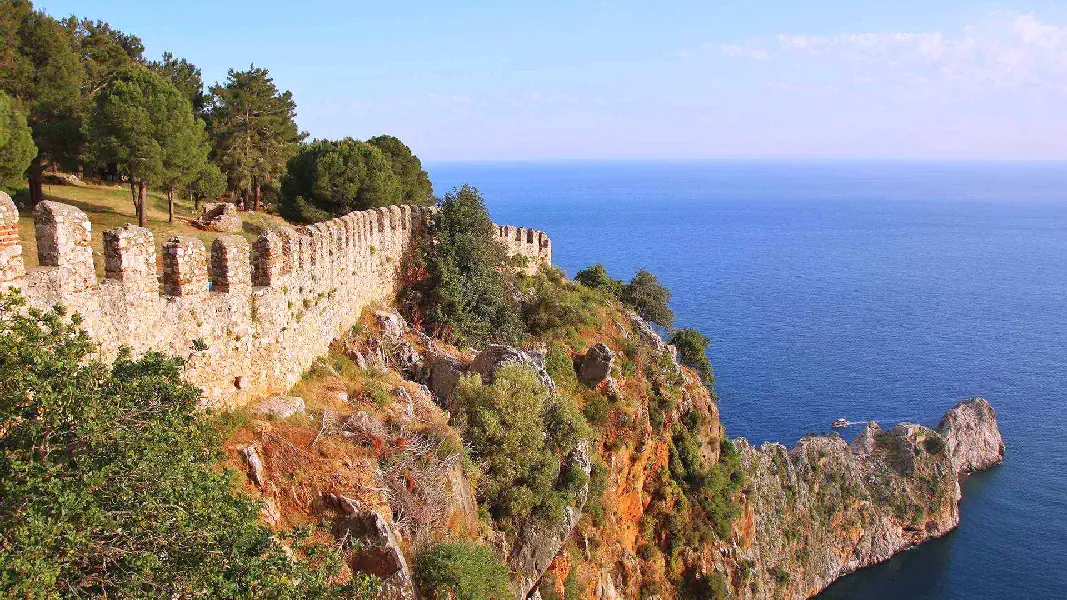
Alanya is a perfect holiday center with its wide beaches, historical monuments, modern hotels and motels, numerous fish restaurants, cafes and bars. The first to welcome the visitors is the magnificent 13th century Seljuk Castle, built like a crown on the Alanya Peninsula. In addition to the impressive castle, its unique shipyard and the monumental octagonal Red Tower are worth seeing.
There are cafes and bars surrounding the harbor and boutiques selling handicrafts, leather, clothes, jewellery, handbags and gourds decorated with interesting local colors along the harbor road in the evening.
If you like to explore caves, you should visit Damlataş Cave. Near the cave is the Ethnographic Museum. By boat, you can reach three sea caves: the Phosphorous Cave with its phosphorescent rocks, the Girls' Cave, where pirates kept female captives, and the Lovers' Cave.
15 km from Alanya. Dim Stream Valley, located in the east, is an ideal place to relax in the coolness of the shadows. Alanya, where you can swim from all its beaches, is a paradise of sun, sea and sand.
Climate: A typical Mediterranean climate prevails in Alanya. Winters are rainy and humid, summers are dry and hot. The annual average air temperature is 19ºC. The sea water temperature is 21ºC.
| Languages spoken | TR,EN,RU |
|---|---|
| Currency | $,€,₺ |
Sports & nature
PLACES TO VISIT
Sports Events
Rafting: The most convenient river for rafting in the region is 6 km. It is the Dimçay river flowing into the sea in the east. It is located on the river, 20 km from Alanya. It is possible to do this sport in the "Alraft Facilities" in the northeast.
Mountain Sports: Recently, Akdağ (2451 m.) and Cebelireis Mountain (1649 m.), which are suitable for trekking and amateur mountaineering, have started to develop in the district. Akdağ has been declared a Winter Sports Tourism Center by the Ministry of Tourism in line with this purpose.
Alanya Triathlon: Held every year in October,
These international sports events started in 1991. This event, which is broadcast to the world by Eurosport TV, is held without interruption in the form of swimming, cycling and running.
Hunting: The region has a significant hunting potential due to its climate, geography and vegetation.
In order to protect the deer, the number of which has decreased considerably, hunting is prohibited and hunting of wild goats is carried out in a controlled manner. It is possible to catch almost all kinds of fish within the borders of Alanya.
Camping: There are many camping opportunities in and around Alanya, with campers and caravans.
Castle and Towers
Alanya Castle: Alanya Castle is the only Seljuk castle preserved until our time. In 1225, a new castle was built by the Seljuk Sultan Alaaddin Keykubat instead of the Roman Castle ruins. The castle, which has 83 towers and 140 bastions and is surrounded by three rows of walls, consists of inner and outer castle parts as a whole.
Aya Yorgi Church, Kanuni Sultan Süleyman Mosque, Akşabe Sultan Tomb, Seljuk Bath, Arasta, Bedesten, Sitti Zeynep Tomb, Sultan Alaaddin Palace, large and small cisterns, lighthouse and dungeon, the castle is a historical treasure.
Red Tower: The Red Tower, named after the cut stones on the lower and upper parts, was built in 1226.
Even today, there is a height difference of 2 meters between the east and west facades of the tower, which is still standing due to the location of its seat. The octagonal tower has five floors. There is a section rising from the middle of the ground floor up to the fifth floor.
This section, which acts as a water cistern, is the backbone of the tower. The ground floor serves as an ethnographic museum.
Ancient Cities
Leartis-Learti (Mahmutlar Ruins): This place, also called the great ruins or the great church, was established on the slopes of the hills of various sizes along the coast of the county. It is 22 km from the town center.
away from the city, there are churches, baths, cisterns, settlement centers, a small stadium theater, columned streets and temples.
Syedra Ruins: City of Syedra BC 3rd century It was established on a hill where today's Kargacı and Seki villages form a border.
It is understood from the inscriptions found in Syedra and its surroundings that the section on the hill is known to be the center of the city, and that the city is a Roman ruin. The lintel of the monumental entrance gate of the city is still intact. On both sides of the colonnaded street, historical artifacts and mosaics made for various purposes can be seen.
There are three pools in the city, which were probably used as water tanks.
Lotape (Aytap) Port City: Aytap is 30 km from Alanya. east of it. Today's Mediterranean coastal road passes through the middle of this Roman city. It is known that King Antichus gave this name to the city in memory of his wife, Iotape. 50-100 meters from the city. It has a large port.
Although it is very difficult to reach the castle, which is built on a very high hill in the form of a peninsula, the view is beautiful enough to make you forget all tiredness. The ancient street, bath, church, necropolis and acropolis of the city of Iotape are the best surviving ancient cities in the surrounding area. single room,
The covered burial chambers are also in the ancient ruins of the city.
Seljuk Shipyard: Built in 1228, the shipyard is 56.5 m. in length, 44 m. It is deep and has 5 eyes. The shipyard was fortified with a two-storey, two-room tower against the dangers that may come from the south.
Mosques
Süleymaniye (Castle) Mosque: The mosque, which has Ottoman architectural features, dates back to the 16th century. It is known that it was built on a Seljuk temple. The wooden sections on the doors and windows are the best examples of Ottoman woodworking.
Emir Bedrüddin Mosque: The mosque, known today as Andızlı Mosque, got its name from the andız tree next to it.
Next to the mosque, which was built by Emir Bedrüddin in 1227, there is a minaret made of cut stones, which is not very high. Its pulpit is one of the most beautiful examples of carving art.
Akşebe Sultan Masjid: Akşaba Sultan is one of the first commanders of the Alanya castle. The masjid was built by himself in 1230.
There is a minaret with its own unique architecture in the west.
caravanserais
Alara Inn: 9 km from the sea, of the Alara Stream, which forms the Alanya-Manavgat border. It was built in the north direction. 35 km from Alanya. The Alara Caravanserai, which is far away, was built by Sultan Alaaddin Keykubat in 1232 on an area of 2000 m² entirely from cut stones.
The Sentry Cabin is a work worth seeing with its fountain, masjid and bath that preserves all its features even today.
Sarapsa Caravanserai: The 15th km of Alanya - Antalya asphalt. On an area of approximately 850 m² on the upper part of the road, Sultan Alaaddin Keykubat's son II. 1236 by Gıyaseddin Keyhüsrev -
It was built between 1246.
caves
Damlatas Cave
Great Bottomless Cave
Cimenici Cave
Dim Cave
Beldibi Cave
Derya Cave
Other Notable Caves
Hasbahçe Cave: It is located in the Küçük Hasbahçe neighborhood of the district, in the landing dibi locality, 4 km from the city. away.
There is not much information in the cave, which is several times larger than the Damlataş Cave, since no in-depth research has been done.
Kadı İni Cave: 15 km from the town center. It is located at a place called Çatak locality, in the northeast direction. Picnic places in the surrounding give a different vitality to the region.
Pirate's Cave: The Pirate's Cave was once famous as the place where fearsome pirates stored the goods they obtained from the robberies and kept the girls they had kidnapped. The cave is approximately 10 m. The mouth part, which is 5-6 m high in width, allows boats to enter easily.
Inside, it is possible to see the colorful stones that cover people like a mosque dome and the darkness extending to the north.
Lovers Cave: The gate of the Lovers Cave is two meters above the sea surface and large enough for people to enter. This door is decorated with stalactites, stalagmites and columns.
Phosphorus Cave: The door of the Phosphorus Cave, which has a similar appearance to the Korsanlar Cave, is large enough to allow the boat to enter. The colors formed at the bottom of the sea are worth seeing.
beaches
Unlike most holiday resorts, there are beaches in the center of Alanya. 15 km from Alanya.
Dim Cagi Valley, located in the east, is an ideal place to relax in the coolness of the shadows. About 25 km from Alanya. Avsallar, located in the west, is a beautiful holiday center with its beaches. If you go east from Alanya towards Gazipaşa, you will come across excellent beaches. 30 km. of Alanya, a historical port. east of Aytap,
Its beaches and coves, preserved in Roman ruins, are an important sightseeing point.

Culture and history info
History: Alanya was sometimes counted as a part of Cilicia and sometimes as a part of Pamphylia. Later, Hittites, Greeks and Romans dominated the region respectively.
Destroyed by various invasions and wars, the city was rebuilt by the Romans. In the Byzantine period, Alanya was called Kolonoros, which means "Beautiful Mountain". 13th century Alahaddin Keykubat I, one of the Seljuk rulers, took the city and changed its name to Alaiye. 13th century
Alanya, which was captured by the Karamanids in the middle of the year, joined the Ottoman lands in 1471.

 This site uses cookies to personalize your experience and provide you with better service. In accordance with KVKK and GDPR, you can refer to our